





Immune system
Pathogen:
A microscopic organism that is hurtful to you and uses your cells to reproduce
Innate immune system:
Responds to all pathogens in the same way and quickly
Physical/chemical barriers:
The skin is part of the innate immune system and keeps pathogens from entering your body
It has anti microbial peptideslike CAMP, sweat, shedding, flushingtemporary redness of skin, blushing is an example of flushing, it is slightly acidic and has a special microbiome
Mucous membranes line all your body that is exposed to the exterior
Mucous membranes produce mucus which is viscous and traps microbes and removes them along with itself from the bodyhence a runny nose during illness
Your digestive system is part of your innate immune system
It has gastric acid, bile acids, digestive enzymes, gut microbiome, lysozymesanti microbial enzyme, defensinsanti microbial proteins and other barriers
Respiratory airways and lungs have barriers like defensins, lysozymes, mucus transport system
NasopharynxNose,mouth combined tube region has mucus, saliva and lysozyme
Eyes have tears
Brain has the blood-brain barrier
Inflammatory response:
Specialised cells called mast cells search for unknown objects like proteins and release histamine when they find it
Histamine makes the blood vessels more permeable which makes more fluid enter the affected region
This causes inflammation and brings a lot of white blood cells to the area
White blood cells are also called leukocytes
When inflammatory response is due to harmless substances then it is called an allergic reaction
Leukocytes:
Leukocytes move through the circulatory system
When they get to the site of the infection, they send signals to the capillaries to open a gap between its cells
It then oozes through the gap in a process called DiapedesisGreek for oozing through
Types of leukocytes:
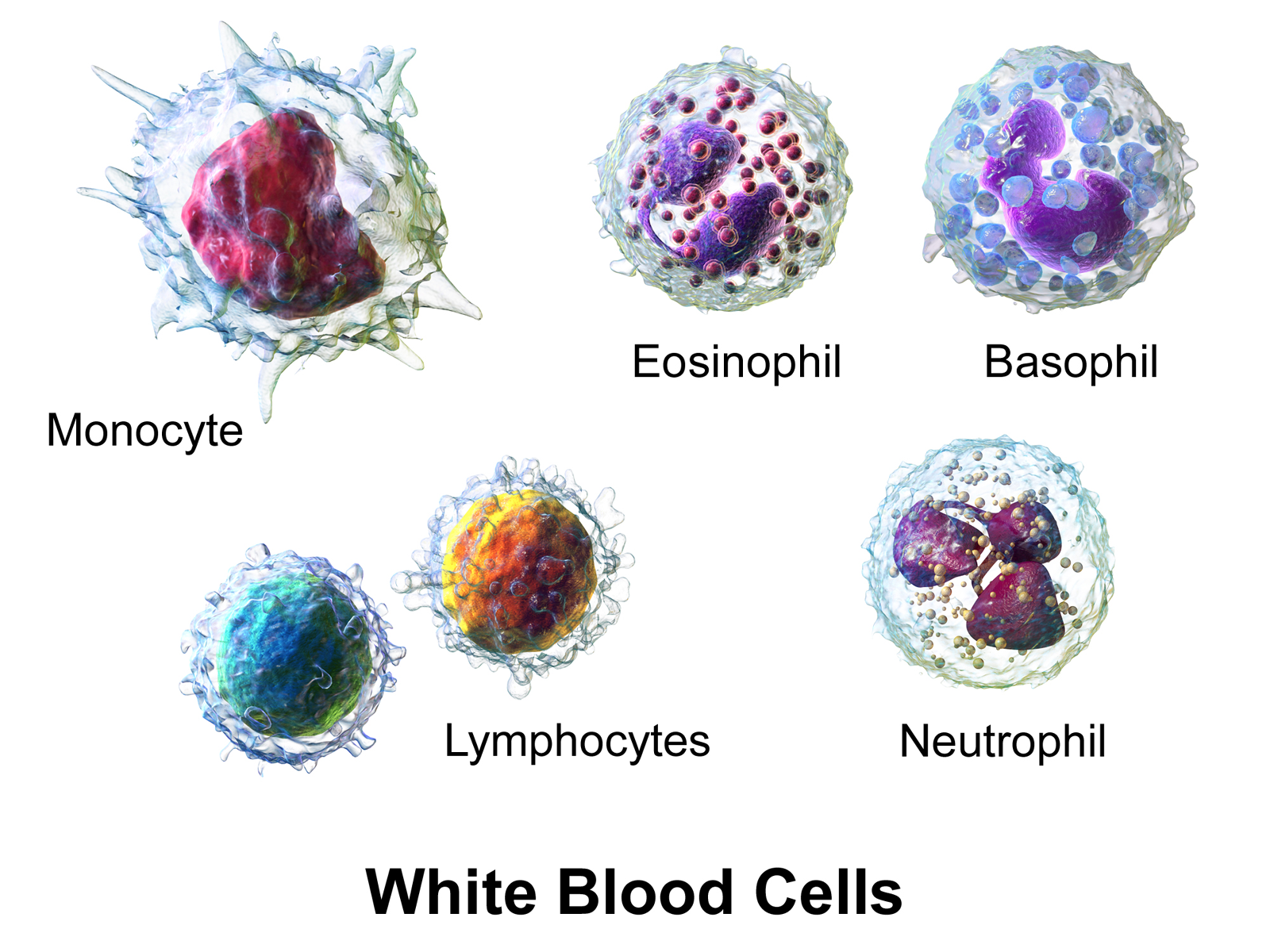
Granulocytes:
Leukocytes that have special secretory vesicles called specific granules.
There are 4 types of granulocytes
Neutrophils:
Neutrophils die after engulfing a microbe, dead neutrophils collect into pus
They are the most abundant granulocyte
They produce cytokines that amplify inflammatory response
Basophil:
Responsible for inflammatory response and allergic diseases including asthma, anaphylaxis and hay fever
They produce histamine, serotoninInduce inflammation and heparinPrevent blood clots
They are the largest and least common granulocyte
Eosinophil:
They are responsible for combating multicellular parasites and some infections
After activation, they produce cytokines and reactive oxygen species
They are granulocytes that don't multiply or differentiate
Mast cells:
They are a type of granulocyte that play an important role in inflammatory response
They are similar to basophils in appearance and function
They are also involved in wound healing, formation of new blood vessels and immune tolerance
Monocytes:
The largest type of leukocytes.
They differentiate into macrophages and dendritic cells.
Macrophages:
Macrophages are a type of monocyte that doesn't travel much
They can kill cancer cells, pathogens, foreign substances and cellular debris
They play a role in increasing inflammation, stimulating the immune system and decrease immune reaction using cytokines
Dendritic cells:
Dendritic cells are a type of monocyte that are present on tissues that are exposed to the exterior
They eat pathogens and carry information about it to the acquired immune system via the spleen or lymph nodes
They look similar to dendrites but perform distinct functions
Lymphocytes:
Leukocytes more common in the lymphatic system than blood
Natural killer cells:
Natural killer cells are the only phagocyte that can kill human cells
When cells are healthy, they have a protein on their surface called MHC1Major Histocompatability Complex 1
When cells are infected or cancerous they stop producing MHC1
When natural killer cells find a cell that doesn't produce MHC1 it binds with it and secretes an enzyme to dissolve the cell's membrane killing it
T-cells:
Lymphocytes that play a major role in the cell-mediated response by the adaptive immune systemAcquired immune system
A type of T-cell called regulatory T-cells are responsible for preventing autoimmune responsesImmune responses against non-infected cells
B-cells:
Lymphocytes responsible for humoral response by the adaptive immune system
They secrete cytokines
Phagocytes:
Cells that ingest foreign substances or invaders
They use phagocytosis
Monocytes, neutrophils and mast cells are phagocytes
Acquired immune system:
Is slower and requires previous contact with the pathogen
Antigensantibody generators are anything that causes the immune system to ID a pathogen and create against it
Antibodies are highly specialised proteins produced by B cells to recognize and help attack invaders
Antibodies act as tags and attach themselves to invaders and release chemical signals to nearby phagocytes
Acquired immune system has a special type of leukocyte called lymphocytes which attack invaders that are already known to the body
There are 2 major types of lymphocytes called the T-cells and the B-cells
T-cells form in the bone marrow and migrate and mature in the thymus gland, which is right behind the sternumBrest bone
B-cells originate and mature in the bone marrow
Cell mediated response:
Response for infected cells
This process mainly involves T-cells
Helper T-cells get information from other immune cells via antigen presentation
When an immune cell destroys an invader, it can put a bit of the antigen on its membrane this is called antigen presentation
The helper T-cells attaches itself to the antigen presented
The antigen presenting cell produces a chemical called Interleukin 1, which tells the helper T-cell that an antigen is on its surface
The helper T-cells looks at the antigen and releases Interleukin 2
Interleukin 2 tells all the lymphocytes in the area that there is an invasion
The helper T-cells then starts making a lot of copies of itself
Most of there copies differentiateTurn into more specialised cells into effector T-cells, effector T-cells secrete signaling proteins that stimulate nearby lymphocytes to activate
Most of the copies that didn't differentiate into effector T-cells differentiate into memory T-cells
Memory T-cells keep a record of the intruder and provide future immunity against it
When a cell gets to infected to recover, it presents antigens to kill it
When the cytotoxic T-cell activates because of interleukin 2, it looks for normal cells presenting antigens
It then latches on to it and releases enzymes that create holes in the cell's membrane, eventually killing the cell and the pathogen
Humoral response:
Response for invaders in the body fluids
This mainly involves the B-cells
When they get the signal from a helper T-cell, they activate
B-cells are covered in antibodiesupwards of 100,000 antibodies that can detect and bind to a specific antigenall antibodies are for 1 antigen, different B cells have antibodies for different antigens
When a B-cells bumps into an invader it recognizes, it attaches to it and starts to clone itself a lot
The clones differentiate into new versions of the original.
Most differentiate into effector cellsalso called plasma cells, these use the antibody as a blueprint and create a lot of that antibodyaround 200 antibodies per second
Once the antibodies are released, they bind to the pathogens and mark them for phagocytes
Most of the cloned B-cells that didn't differentiate to effector cells differentiate into memory B-cells
Memory B-cells provide future immunity from the pathogen